The gap between open-weight AI models and closed APIs like GPT-5.5 and Claude narrowed to almost nothing in 2026 — and the only real catch left is that you have to host them yourself. A run of openly licensed releases this year, from Zhipu AI's GLM-5.2 to Google's Gemma line, means the frontier is no longer locked behind a paid API. What you trade for that freedom is no longer model quality; it's the work of running and maintaining the infrastructure. Here's what changed, what it costs, and when self-hosting an open model actually makes sense.
What are open-weight models, and what changed in 2026?
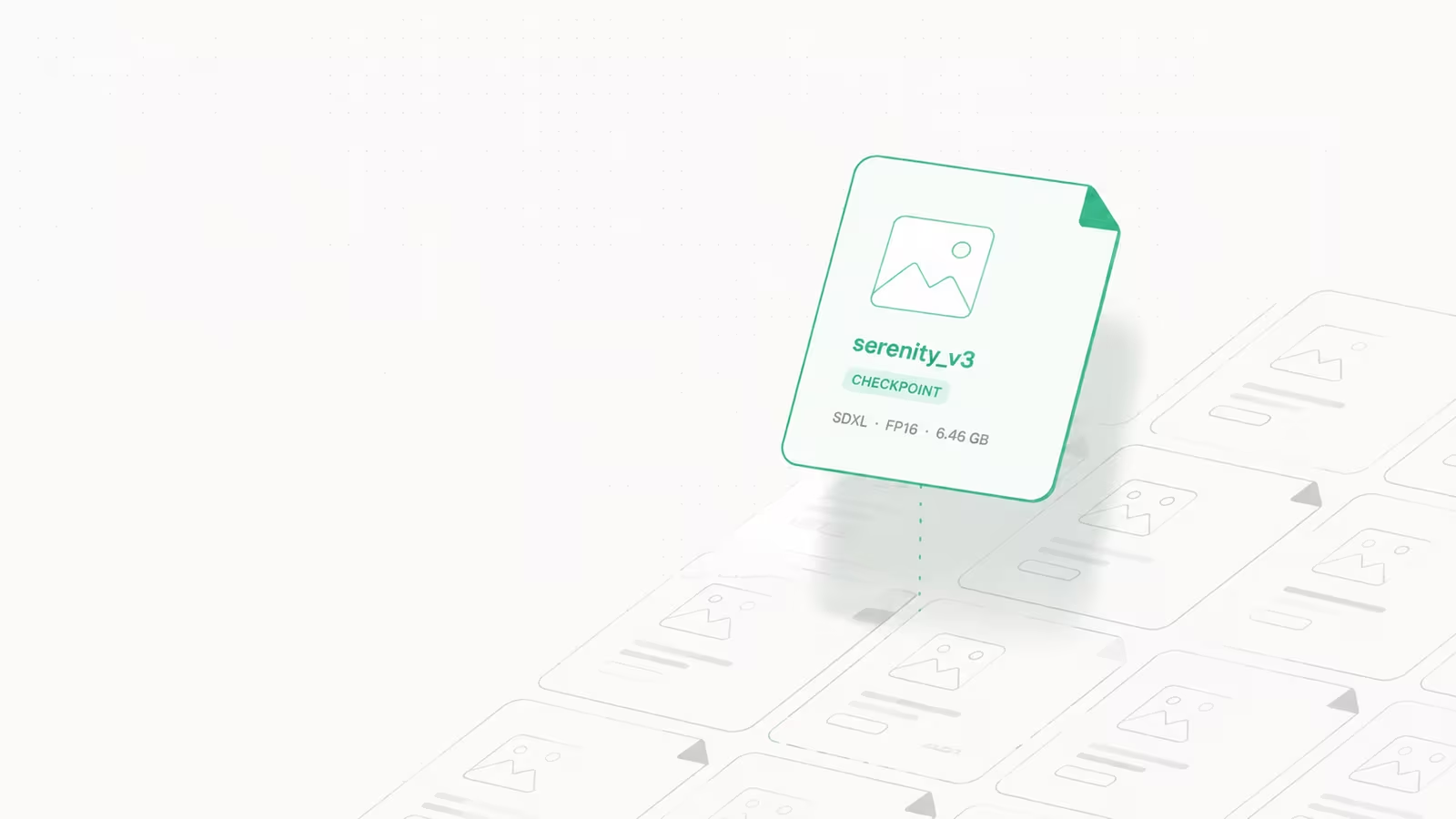
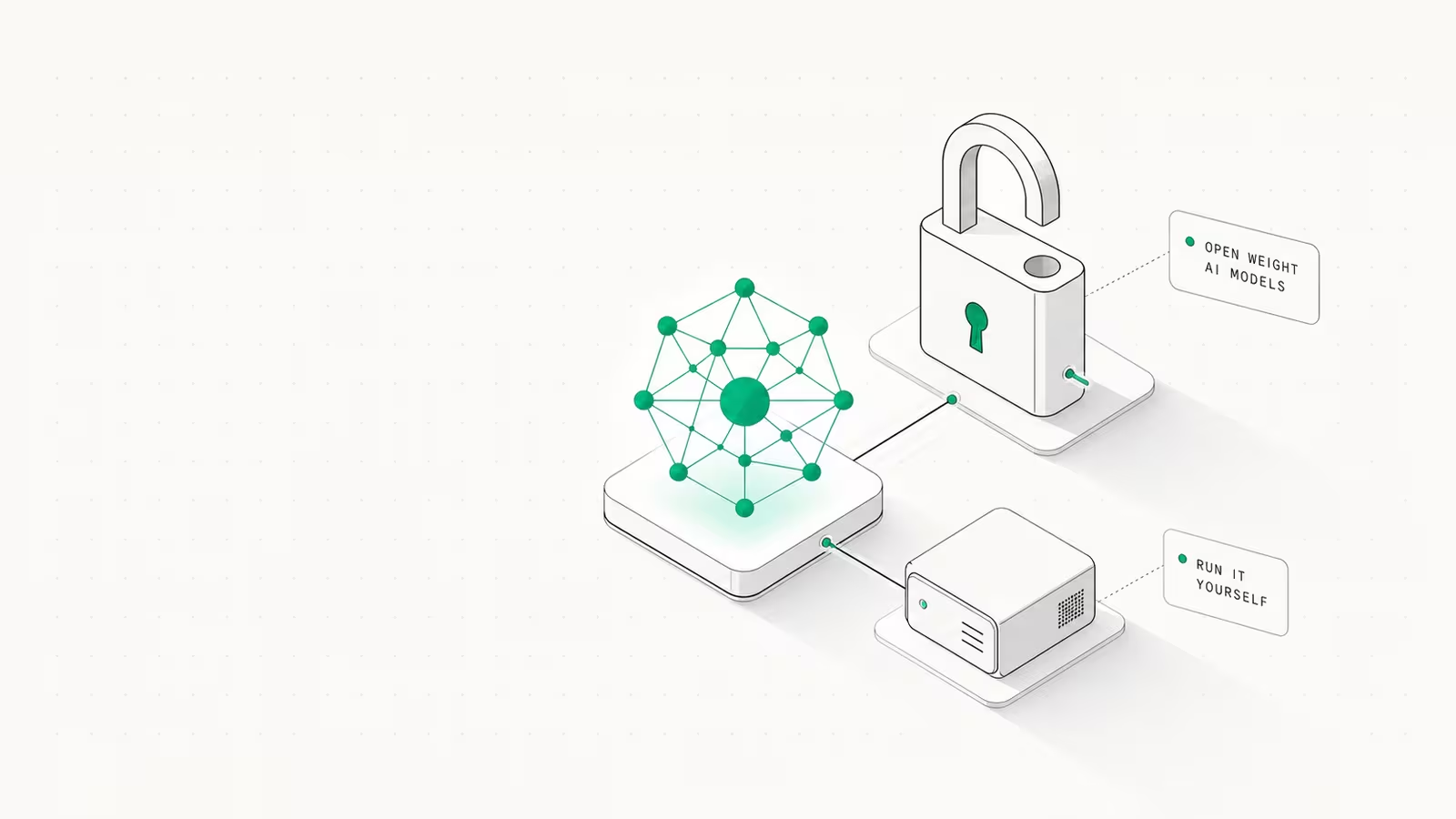
An open-weight model ships its trained parameters publicly, usually under a permissive licence, so you can download it and run it on your own hardware instead of calling a vendor's API. For years the trade was obvious: open models were cheaper and private but visibly weaker than the best closed APIs. In 2026 that gap narrowed sharply. According to model trackers, Zhipu AI released GLM-5.2 in June 2026 as an open-source model — part of a busy year for open weights. A June 2026 roundup documents open models posting scores that rival proprietary ones: MiniMax M3 reportedly hit 59.0% on SWE-Bench Pro, and GLM-5.1 (MIT-licensed) took the top spot on Terminal-Bench 2.0. Google has pushed the same direction with its open Gemma line for agents. The headline isn't any single model — it's that "open" no longer means "second best."
Recent open-weight releases worth knowing
| Model | Maker | Licence | Reported result |
|---|---|---|---|
| GLM-5.2 | Zhipu AI | Open-source | Released June 2026 (per llm-stats) |
| MiniMax M3 | MiniMax | Open weights | 59.0% on SWE-Bench Pro (per devflokers) |
| GLM-5.1 | Z.ai | MIT | Terminal-Bench 2.0 SOTA (per devflokers) |
Licences and capability claims above are as reported by the linked trackers and roundups, not independently benchmarked by TechRiseUps. Treat benchmark rankings as vendor- and reviewer-reported until you test on your own workload.
What does it actually cost to self-host a capable model?
This is where the "catch" lives. The model is free; the hardware is not. Small open models run on a modest GPU or even CPU, but the larger, frontier-class open weights want serious VRAM — which is why the 2026 story includes hardware as much as software. Industry coverage points to new unified-memory machines aimed squarely at local inference, and renting matters too: for occasional or bursty workloads, an hourly cloud GPU is often cheaper than buying a card that sits idle. We broke down those rates in our guide to the best cloud GPU providers for AI in 2026. The honest rule of thumb: if you run inference constantly, owning hardware amortises; if you run it occasionally, rent by the hour. Either way, budget for the GPU, not the model — the weights cost nothing.
When is self-hosting worth it — and when is an API still better?
Self-hosting wins on three fronts: privacy (your prompts and data never leave your infrastructure, which matters for client or regulated work), cost at scale (no per-token bill once the hardware is paid for), and control (no rate limits, deprecations, or surprise price changes). An API still wins when you want zero ops, instant access to the absolute latest model, and elastic scale you don't manage. The deciding question is the same one that governs all self-hosting: do you have someone who will own the box? The pattern mirrors the shift we covered in why cheap flash AI models are quietly winning production — most teams don't need the absolute top model, they need a good-enough one that's cheap and predictable, and open weights now deliver exactly that.
What this means for developers
The practical takeaway: in 2026 you can build a serious AI product without an API key, but you're signing up to run infrastructure. Tooling has caught up to make that realistic — the Model Context Protocol is now a common layer across agent frameworks, and self-hostable agents (like the ones behind OpenClaw) run on entry-level servers. Start by matching the model to the job: a small open model for classification or extraction, a larger one only where quality genuinely needs it. Prototype against an API to move fast, then move the steady-state workload to a self-hosted model once the volume and privacy requirements justify the ops. The frontier is open now; whether you walk through that door depends on whether you want to own a server.
Frequently asked questions
Are open-weight models as good as GPT-5.5 or Claude in 2026?
On many tasks, close enough to matter. Roundups of 2026 open releases report models like MiniMax M3 (a reported 59.0% on SWE-Bench Pro) and GLM-5.1 (top of Terminal-Bench 2.0) now rivalling proprietary offerings on coding benchmarks, where open models used to trail. "As good" still depends on your specific workload, so the safe approach is to test a candidate open model on your own tasks rather than trusting a single benchmark ranking.
Is it cheaper to self-host an AI model than to use an API?
At high, steady volume, usually yes — once the hardware is paid for there's no per-token bill. At low or bursty volume, an API (or an hourly rented GPU) is often cheaper because you're not paying for idle hardware. The break-even depends on how constantly you run inference; constant workloads favour owning, occasional ones favour renting or an API.
What hardware do I need to run an open-weight model?
It depends entirely on model size. Small open models run on a modest consumer GPU or even CPU; frontier-class open weights need substantial VRAM, which is why 2026 saw new high-unified-memory machines marketed for local inference. For occasional use, renting a cloud GPU by the hour avoids buying a card that sits idle most of the day.
What licence are these open models under?
It varies by model, and the licence matters for commercial use. Several 2026 releases shipped under permissive open-source licences, but "open-weight" doesn't automatically mean unrestricted commercial rights. Always read the specific model's licence on its model card before shipping it in a product.
Sources
- LLM Stats — model updates — GLM-5.2 release (Zhipu AI, June 2026) and recent open releases
- devFlokers — open-source AI roundup, June 2026 — MiniMax M3 (59.0% SWE-Bench Pro), GLM-5.1 (MIT, Terminal-Bench 2.0 SOTA) and other open releases
- Pinggy — best open-source self-hosted LLMs for coding 2026 — self-hosting landscape and hardware context
Some links may earn us a commission at no extra cost to you.

Waqas Ahmed Waseer
Waqas Ahmed Waseer is a developer and automation builder with 8+ years shipping production systems used by 100k+ people. He builds custom multi-tenant SaaS, AI automation (n8n, LLM workflows, WhatsApp bots) and hosting infrastructure (WHM/cPanel, CloudLinux) — and is the maker of WaSphere, FlowMaticX, and the WaseerHost hosting brand. 100+ projects delivered for SMBs, agencies and funded startups.