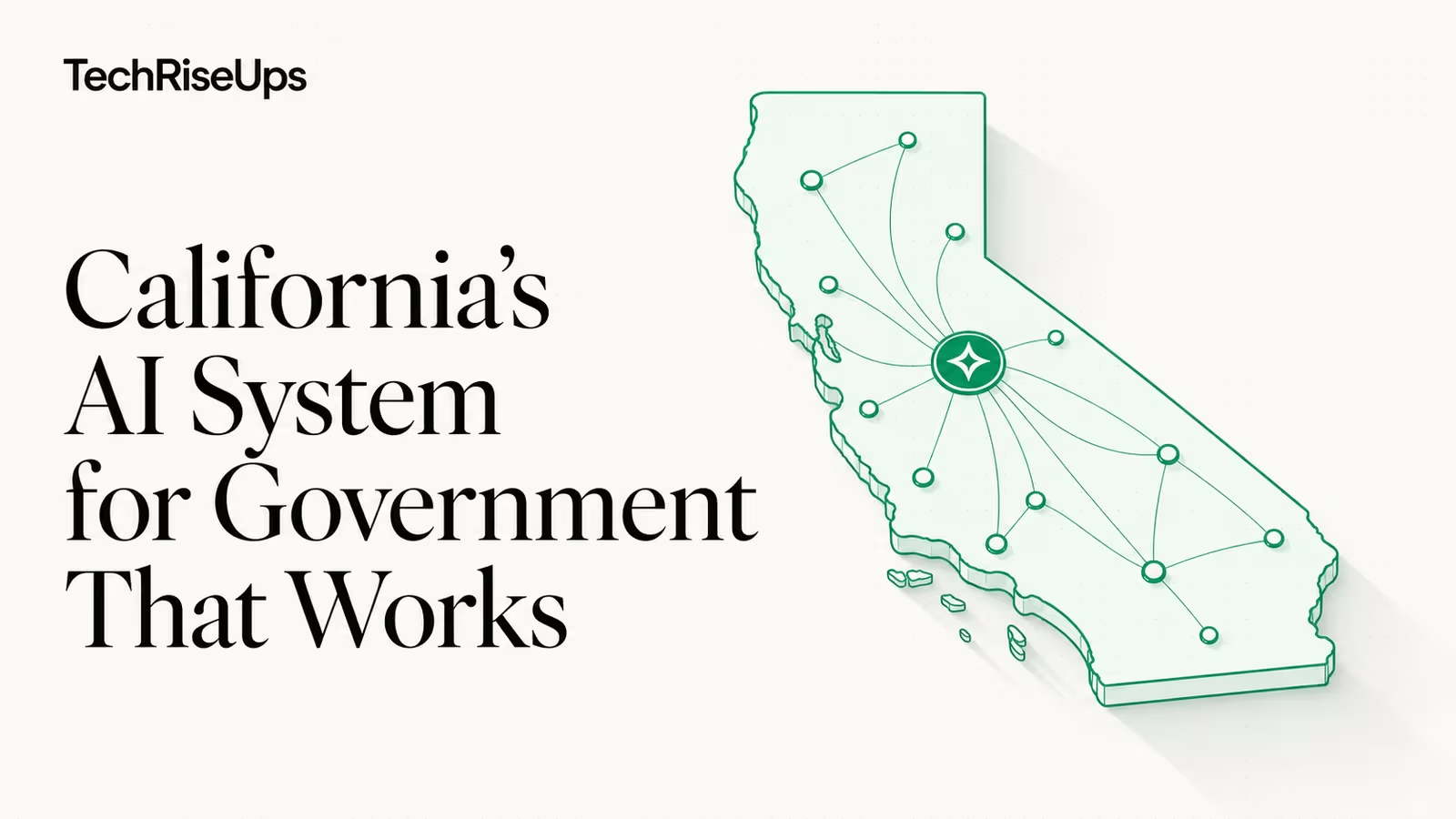
California signed a first-of-its-kind deal to put Anthropic's Claude across its state government at a 50% discount, announced by Governor Gavin Newsom on June 29, 2026. It makes California's government the largest public-sector deployment of Claude in the United States and, more importantly, sets up the first centralized, statewide AI procurement model any US state has tried. Here is what the deal actually covers, which agencies are already using Claude, why the procurement change matters more than the discount, and the risks the state is taking on.
What did California and Anthropic agree to?
The agreement gives California's state agencies — plus interested cities and counties — access to Claude at 50% off, bundled with free workforce training, technical assistance, and workflow input from Anthropic's developers. Claude becomes the first AI productivity tool offered through the California Department of Technology's new Statewide Information Technology Shared Services portal, a single procurement channel every department can buy through. The state has not published contract value, per-seat pricing, a worker headcount, or a rollout timeline — those terms remain private. Anthropic framed it as a home-state commitment: "As a California company, we feel a real responsibility to our home state," said Kate Jensen, Anthropic's head of the Americas. So the public facts are narrow — a discount, a shared portal, and training — but the structure behind them is the part that breaks new ground.
Which agencies are using Claude, and for what?
Several large agencies were already running Claude before the statewide deal formalized access. The DMV is using it to improve customer service and cut wait times; the Department of Health Care Services — the largest Medicaid agency in the country — uses it for internal workflows to help staff serve recipients faster. Across agencies, the day-to-day work is unglamorous but high-volume: drafting and summarizing documents, analyzing information, and answering routine questions so caseworkers spend less time on paperwork. That framing is deliberate. Newsom drew a hard line on scope: "AI should not replace the human work of government; it should help our workers move faster, solve problems more effectively, and deliver better results for Californians." The pitch is augmentation, not headcount reduction — a positioning the state will be held to as the tools spread from pilot agencies into everyday use.
The real story is procurement, not the discount
The 50% price cut grabs headlines, but the structural change is bigger. California built the first centralized, statewide AI contract: instead of each department negotiating its own deal and clearing its own approvals, they buy Claude through one shared framework with terms already vetted. The foundation was Newsom's executive order N-5-26, signed March 30, 2026, which set procurement standards and safeguards for AI vendors that want state business. That is what turns a vendor discount into infrastructure — it lowers the friction for a health agency, a transit department, and a county office to adopt the same governed tool on the same terms. It is the public-sector version of the cost-and-standardization logic driving private adoption, the same pressure we covered in why cheap flash AI models are quietly winning production. Standardize the contract, and adoption stops being a per-department fight.
The risks California is taking on
A centralized rollout concentrates the upside and the downside. If Claude produces errors in government workflows, mishandles sensitive data, or generates outputs that create legal liability, the failure lands on the state, not a single department — and a high-profile stumble in benefits, healthcare, or DMV records could chill public-sector AI adoption nationally. Government data raises the stakes on accuracy and privacy far above a typical enterprise pilot: a wrong Medicaid eligibility summary or a leaked record is not a support ticket, it is a person's benefits or a lawsuit. Autonomous or tool-connected AI adds its own attack surface, the kind detailed in AI agent security and the prompt-injection crisis. California's answer is the guardrails written into N-5-26 plus mandatory training, and Newsom's insistence that the technology stay "responsible, transparent, and in service of people." Whether procurement standards and training are enough oversight for a deployment this large is the open question — and the one other states will watch.
What it means for other states and the AI market
California just wrote a template. A centralized, pre-vetted AI contract that cities and counties can join is exactly the kind of model other state governments copy rather than reinvent, and it hands the incumbent vendor a durable position once departments standardize on one assistant. Anthropic enters this from a position of home-field advantage — California is home to 33 of the top 50 private AI companies — but also fresh federal friction, having faced scrutiny over access approvals for its advanced Mythos 5 model. For the wider market, the signal is that public-sector AI is moving from scattered pilots to governed, standardized procurement. The buyers who win will be the ones who lock in favorable terms and real guardrails before a tool becomes the default. For governments still standing up AI rules, the compliance groundwork matters as much as the model choice — see EU AI compliance mandates and what teams must implement.
FAQ
What is the California–Anthropic Claude deal? Announced June 29, 2026 by Governor Newsom, it lets California state agencies, cities, and counties use Anthropic's Claude at a 50% discount, with free workforce training and technical support. Claude is the first AI tool offered through the state's new centralized IT Shared Services portal, making it the largest public-sector Claude deployment in the US.
How much is California paying for Claude? The state disclosed a 50% discount but has not made the contract value, per-seat price, or total cost public. Rollout timelines were also not released.
Which California agencies use Claude? Early adopters include the DMV, using Claude to improve customer service and reduce wait times, and the Department of Health Care Services — the largest Medicaid agency in the country — using it for internal workflows. The statewide portal opens the same terms to every other agency and to local governments.
Is California replacing government workers with AI? Not per the state's framing. Newsom said AI "should not replace the human work of government" and is meant to help workers move faster on tasks like drafting, summarizing, and analyzing documents. How that holds up as adoption scales is the part to watch.
What makes this deal different from other government AI pilots? It is the first centralized, statewide AI procurement model in the US. Built on executive order N-5-26 (March 30, 2026), it replaces department-by-department negotiations with one pre-vetted contract, so adoption spreads without each agency starting from scratch.
Sources
- Office of Governor Gavin Newsom — First-of-its-kind Anthropic partnership: official June 29, 2026 announcement — 50% discount, agencies, training, and quotes.
- CBS News Sacramento — California signs Claude deal: the Statewide IT Shared Services portal detail, DMV and DHCS use cases, and Newsom quotes.
- Crypto Briefing — California's statewide Claude deal: the centralized procurement model, executive order N-5-26, undisclosed terms, and deployment risks.
- Yahoo Tech — Anthropic agreement gives California workers Claude at a discount: use cases, Newsom's executive-order context, and California's AI-industry standing.
Some links may earn us a commission at no extra cost to you.

Waqas Ahmed Waseer
Waqas Ahmed Waseer is a developer and automation builder with 8+ years shipping production systems used by 100k+ people. He builds custom multi-tenant SaaS, AI automation (n8n, LLM workflows, WhatsApp bots) and hosting infrastructure (WHM/cPanel, CloudLinux) — and is the maker of WaSphere, FlowMaticX, and the WaseerHost hosting brand. 100+ projects delivered for SMBs, agencies and funded startups.