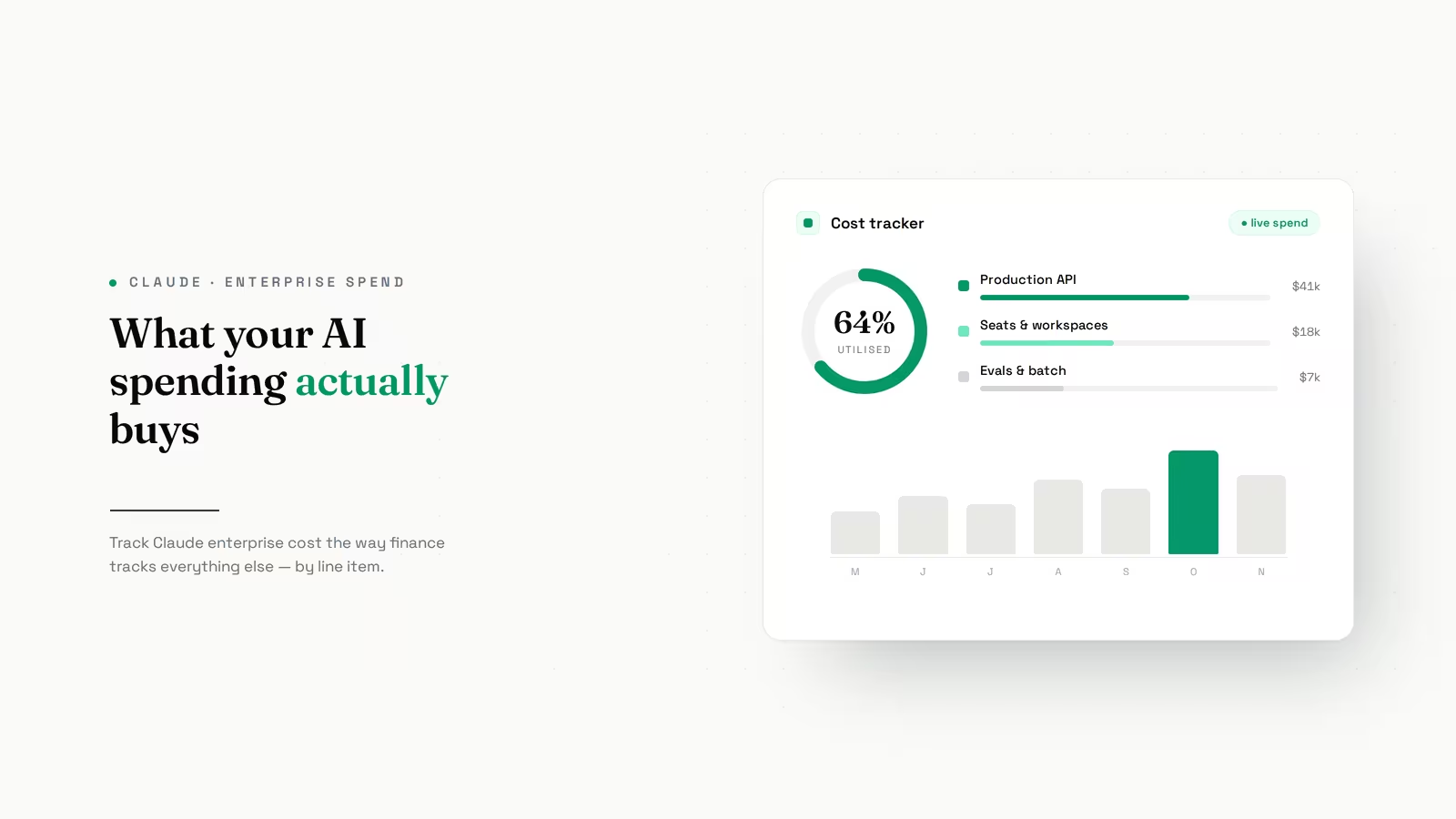
Anthropic has shipped three Claude Enterprise features that try to answer the question every CFO is now asking: what is all this AI spending actually buying? Announced on October 28, 2026, the rollout adds smart reports, in-app surveys, and pooled group budgets — a Claude Enterprise cost tracking stack that ties token spend to the work it produced, asks employees what changed, and caps group budgets before the bill surprises anyone. It lands at a moment when most enterprises still cannot prove their AI pilots paid off.
The timing is not subtle. Spending on Claude keeps climbing — Anthropic reported 900% net revenue retention, meaning the same customers spent roughly nine times more in Q3 2026 than a year earlier — while boards keep asking what they got for it. These tools are Anthropic's attempt to put an answer on the table before the question turns into budget cuts.
What do Anthropic's Claude Enterprise cost tracking tools do?
Three features became generally available on October 28, 2026, all aimed at adoption and spend visibility rather than raw model capability. Smart reports sample a team's Claude transcripts over a date range, group the work into categories, attach what each category cost at list price, and flag failed tool calls and recurring workflows. In-app surveys ask employees, inside Claude, what the tool helped them finish and how it changed their time. Pooled group budgets give a team one shared monthly spending pool on top of each person's individual cap, with email alerts as the pool fills. According to Anthropic's official announcement, the first two are Enterprise-only, while pooled budgets also reach Standard and Premium plans that have usage credits enabled. Anthropic says this data is not used for model training by default.
How do Claude smart reports work?
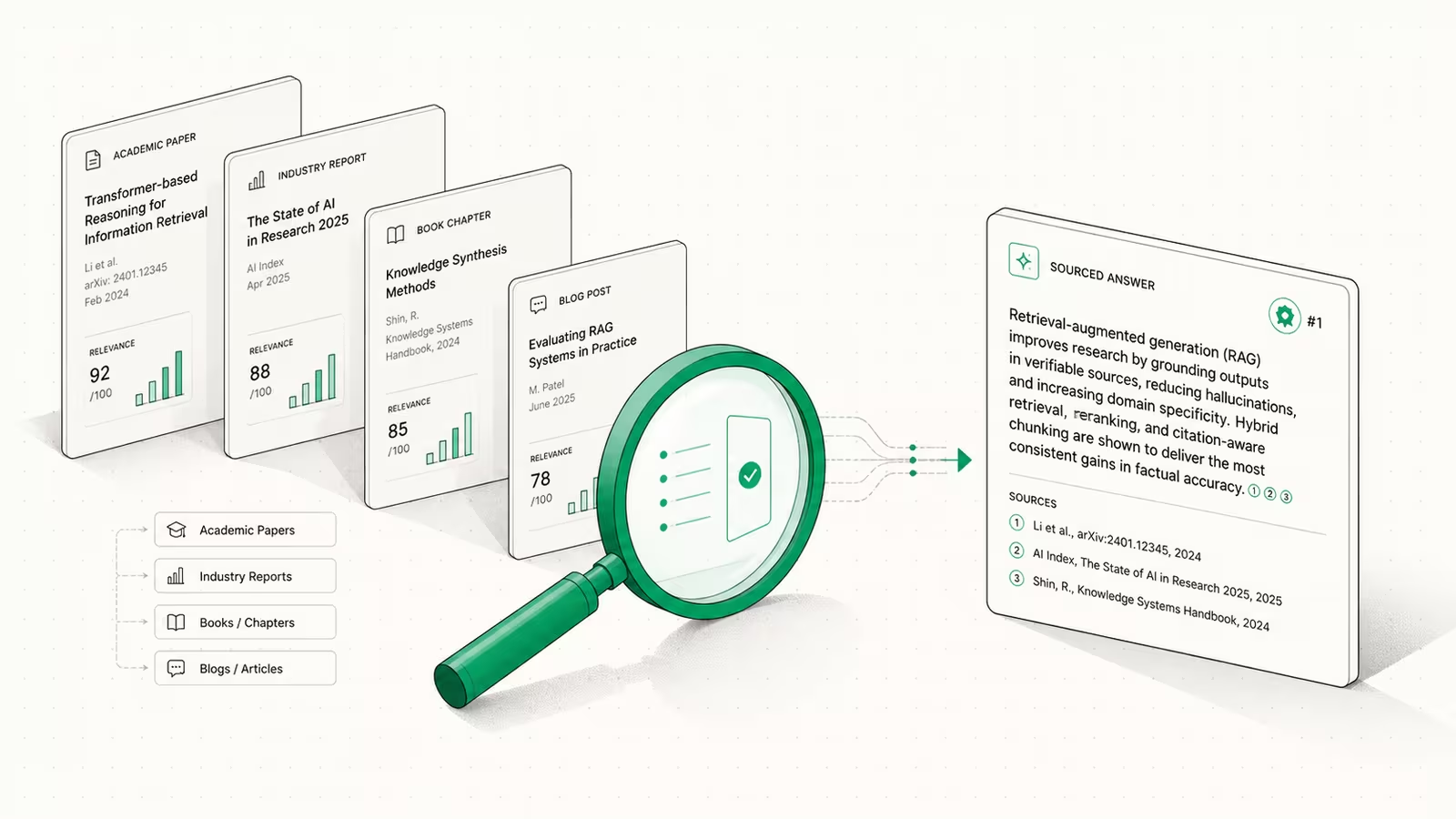
Smart reports are the centerpiece of this Claude Enterprise cost tracking release. An administrator picks a team, a date range of up to 28 days, and which products to include — chat, Claude Code, or Claude Cowork — and Claude samples the transcripts, clusters them into workstreams, and attaches spend at standard pricing. The report that comes back ranks what the group used Claude for most by both sessions and dollars, groups deliverables by output type (analysis, documentation, content drafts, code), shows the average cost per session for each type, and points to where the most expensive sessions concentrate. It also surfaces pain points like unused connectors, approval gating, tool failures, and rework. Generation takes a few hours, downloads as an HTML file with drilldowns, and each organization gets up to 10 reports a month at no charge. The feature is off until a Primary Owner enables it.
Surveys and pooled budgets: the other two pieces
The surveys close the loop that pure usage data cannot. Cards appear at natural breaks — after a chat reply, between Cowork tasks — never interrupting a running task, take about 90 seconds, and show once per user. The four default questions ask what work Claude helped complete, how it changed time spent, which usage pattern teammates should copy, and what would break if access disappeared. Responses export as CSV with timestamp, email, group, and surface.
Pooled budgets handle the money. A group gets one monthly pool that sits alongside each seat's individual limit; every request counts against both, and a user stops at whichever runs out first. Billing admins get email alerts at 50%, 75%, 95%, and 100% of the pool, with the dashboard turning amber at 75% and red at 90%. A "request more" button routes over-limit users to admins instead of hard-stopping their work.
| Feature | What it measures | Who it's for | Availability |
|---|---|---|---|
| Smart reports | What teams did with Claude + cost at list price | Admins planning investment | Enterprise; 10 free/mo |
| In-app surveys | Employee-reported value and time saved | Owners, admins, analytics roles | Enterprise |
| Pooled group budgets | Shared team spend vs. individual caps | Billing admins controlling spend | Enterprise + usage-credit plans |
Why now? The AI ROI reckoning
The backdrop is a credibility problem. A widely cited MIT study found that 95% of enterprise generative-AI pilots delivered no measurable profit-and-loss impact, which turned "what's the ROI?" from a curiosity into a board-level demand. At the same time, coding spend is accelerating faster than anyone budgeted: analytics firm Jellyfish, covering 276,000 customers, found Claude Code now accounts for nearly a third of proposed code changes and that spending on it grew roughly 10x since the start of the year, reaching about 2% of total engineering costs. "Even if you're saying 2% is still small, that 10x growth is growth that most CFOs didn't plan for," Jellyfish chief scientist Nicholas Arcolano told TechCrunch. Giving admins a first-party way to see where the money goes is how Anthropic keeps that growth from becoming the thing finance decides to cut. It fits the broader pattern of vendors racing to serve the AI agent economy with governance, not just capability.
Does this actually prove ROI?
Here is the part the launch coverage mostly skips: these tools measure usage, outputs, and perceived value — not profit. A smart report can tell you a team spent $4,000 generating 300 code reviews and 90 documents, and a survey can tell you employees felt faster. Neither number proves a dollar of business return; "felt faster" is self-reported, and "produced 90 documents" says nothing about whether those documents were worth making. That gap matters because the MIT finding wasn't that AI does nothing, it's that most organizations can't connect AI activity to P&L. Anthropic's tools give you a far better denominator — real spend, attributed to real work — but the numerator, actual business value, still has to come from your own finance and outcome data. Treat smart reports as the best adoption telemetry a model vendor has shipped, and as a starting point for an ROI case rather than the case itself. The same discipline applies whether you're costing Claude, measuring a coding assistant against real per-task cost, or justifying any enterprise AI deal like California's statewide Claude rollout.
The surveillance question
Reading employee transcripts to categorize work is a short step from monitoring people, and Anthropic built guardrails that acknowledge it. Smart reports keep user attribution off by default, and any reveal is logged. Custom survey and report questions are blocked from restricted topics — protected characteristics, health, union activity, harassment, legal matters, political or religious views — and sessions touching those topics show only aggregate analysis. The features are unavailable on HIPAA configurations and for customers using their own encryption keys. Anthropic also states the tools are for understanding adoption and planning investment, not for evaluating individual performance or making employment decisions. Whether managers use them that way anyway is a policy question no vendor setting can fully answer, so the honest move is to write the acceptable-use rules before you turn attribution on.
FAQ
What are Anthropic's new Claude Enterprise cost tracking tools? Three features launched October 28, 2026: smart reports (what teams did with Claude and what it cost), in-app surveys (employee-reported value), and pooled group budgets (shared team spend caps with alerts at 50/75/95/100%). Together they tie token spend to the work it produced.
Which Claude plans get these features? Smart reports and in-app surveys are Claude Enterprise only. Pooled group budgets are available on Enterprise and on Standard and Premium plans with usage credits enabled, where they apply to the usage-credit portion of spend.
Do smart reports read employee chats? They sample transcripts to categorize work, but user attribution is off by default and any reveal is logged. Questions on restricted topics are blocked, flagged sessions show only in aggregate, and the feature is unavailable on HIPAA and customer-managed-key setups.
Do these tools prove AI ROI? Not on their own. They quantify spend, usage, and self-reported value — strong inputs for an ROI case — but connecting that activity to actual profit still requires your own outcome and finance data. They're a denominator, not the full equation.
How much do smart reports cost? Each organization can run up to 10 smart reports per month at no additional charge. The underlying Claude usage they analyze is billed at standard pricing; the reporting layer itself is included.
Sources
- Anthropic (Claude) — Smart reports, surveys, and pooled group budgets: official announcement, feature mechanics, plan availability, and privacy guardrails.
- TechCrunch — Anthropic just launched tools to show companies what their AI spending is buying: launch framing, 900% net revenue retention, Jellyfish data and Arcolano quote.
- Unite.AI — Anthropic Adds Smart Reports, Surveys, Pooled Budgets to Claude Enterprise: detailed mechanics, 28-day range, alert thresholds, budget-sizing example.
- Yahoo Finance / Fortune — MIT report: 95% of generative AI pilots are failing: the ROI-gap research driving demand for measurement.
Some links may earn us a commission at no extra cost to you.

Waqas Ahmed Waseer
Waqas Ahmed Waseer is a developer and automation builder with 8+ years shipping production systems used by 100k+ people. He builds custom multi-tenant SaaS, AI automation (n8n, LLM workflows, WhatsApp bots) and hosting infrastructure (WHM/cPanel, CloudLinux) — and is the maker of WaSphere, FlowMaticX, and the WaseerHost hosting brand. 100+ projects delivered for SMBs, agencies and funded startups.