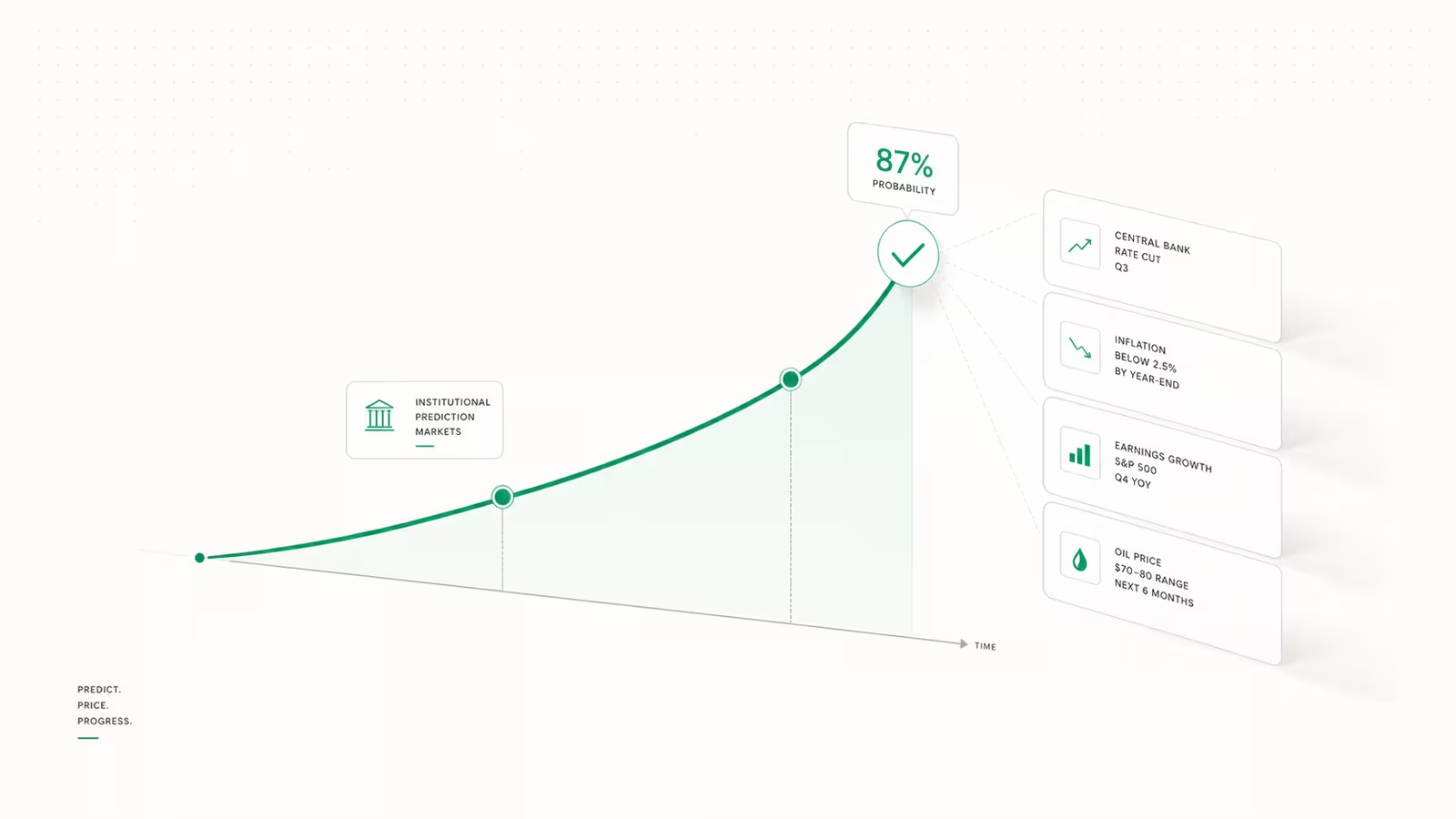
Startup funding 2026 is a paradox: the market is breaking records and getting harder to raise into at the same time. Both are true because the money is piling into a handful of giant AI rounds while everyone else fights over a shrinking pool of deals. Global venture funding hit roughly $300 billion in Q1 2026, an all-time quarterly high, yet the number of seed deals fell about 30% year over year. If your fundraise feels brutal despite the triumphant headlines, that gap is why.
This is a news-and-analysis read on what the 2026 funding data actually shows, who is winning, and what it means if you are a founder trying to raise this year rather than running an AI lab valued in the tens of billions.
What the startup funding 2026 data really shows
Crunchbase pegged Q1 2026 global venture investment at about $300 billion across roughly 6,000 startups, up around 150% both quarter over quarter and year over year. On its own that reads like a boom. The composition is what matters.
AI captured roughly 80% of all venture dollars in the quarter, up from about 55% a year earlier. And four companies — OpenAI, Anthropic, xAI, and Waymo — raised $188 billion between them, nearly 65% of all global venture investment in a single quarter. OpenAI's $122 billion round alone is the largest private financing ever recorded. Strip those mega-rounds out and the "record" market looks far more ordinary.
| Q1 2026 venture funding | Dollars | Deal count vs. a year ago |
|---|---|---|
| Late stage | ~$247B | concentrated in a few mega-rounds |
| Early stage | ~$41B | fewer, larger deals |
| Seed | ~$12B (up ~31%) | deal count down ~30% |
The seed line is the tell. More dollars, far fewer checks. Capital is flowing to bigger bets, not more of them.
Megadeals are setting the tone in June
The concentration didn't stop in Q1. June's funding roundups read like a list of nine-figure-and-up rounds. Jeff Bezos-linked Prometheus raised a reported $12 billion Series B at a $41 billion valuation for industrial AI software, backed by BlackRock, Goldman Sachs, and DST Global. Germany's NEURA Robotics pulled in roughly $1.4 billion in Series C for physical-AI robots, with Qualcomm, Amazon, NVIDIA, and Bosch on the cap table.
A clear pattern sits underneath the noise:
- AI infrastructure — physical and digital — takes the biggest checks. Foundation models, robotics, chips, and the data layer underneath them.
- Cybersecurity, fintech infrastructure, and health systems round out the next tier.
- Late stage dominates dollars; geography concentrates too. U.S. companies captured about 83% of global venture capital (~$250B) in Q1, up from 71% a year earlier.
This is the same dynamic that drove AI seed-round valuations to double in 2026, and it's visible in batch selection too: the YC W26 cohort leaned hard into defense, robotics, and vertical AI. Investors are crowding into the same few themes.
Why it feels harder even though totals are up
There's a real disconnect between the funding press releases and what founders report in their own conversations, and the data explains it. When seed deal count drops ~30% while average check sizes climb, the market is rewarding a narrower group: repeat founders, ex-frontier-lab teams, and companies with paying customers already on the books.
What investors now want, per the June funding analysis, is proof of demand over technical sophistication: paying customers, a clear category claim, and clean metrics. As one roundup put it, a startup with paying customers and a sharp category claim raises faster than a technically impressive product with no commercial validation. Founder pedigree is doing a lot of work, too; teams out of OpenAI, DeepMind, and Anthropic command premium valuations that a first-time founder without those logos simply can't access.
The word "seed" has nearly lost meaning as a result. It now describes both a $2 million first round for an unknown founder and multi-billion-dollar launches for pedigreed AI teams shipping nothing yet. Those are not the same market, and treating them as one is what makes the averages so misleading.
What it means if you're raising in 2026
If you are not building a foundation model, the record totals are mostly noise. A few practical takeaways from the data:
- Lead with traction, not the demo. Revenue, retention, and a named customer beat architecture diagrams. Investors are screening for commercial proof first.
- Pick a category you can claim. "AI for X" where X is a specific, urgent business problem raises faster than horizontal ambition. Specificity is the signal.
- Right-size the round. Larger average checks are a top-of-market artifact. Raise what gets you to a real milestone, not what the headlines imply is normal.
- Watch the concentration risk. When 65% of a quarter's capital sits in four companies, a cooling in AI sentiment would hit the whole asset class. Build for capital efficiency, not for a market that assumes the next mega-round is always coming.
The honest summary of 2026 so far: this is one of the best years on record to be a top-tier AI lab raising capital, and a normal-to-hard year to be everyone else. Both can be true. The trick is reading the headline numbers for what they are, a story about a handful of giants, and running your raise against the market you're actually in.
Sources
The figures above come from Crunchbase's Q1 2026 funding analysis, its reporting on capital concentration, the Tech Startups June funding roundup, and independent June-2026 funding commentary, all linked inline.
Some links may earn us a commission at no extra cost to you.

Waqas Ahmed Waseer
Waqas Ahmed Waseer is a developer and automation builder with 8+ years shipping production systems used by 100k+ people. He builds custom multi-tenant SaaS, AI automation (n8n, LLM workflows, WhatsApp bots) and hosting infrastructure (WHM/cPanel, CloudLinux) — and is the maker of WaSphere, FlowMaticX, and the WaseerHost hosting brand. 100+ projects delivered for SMBs, agencies and funded startups.