OpenArt AI's paid plans run from $14/month to $240/month in 2026, and there's a free tier that hands you 40 one-time trial credits plus limited daily generations on basic models. The number most buying guides skip: commercial usage rights don't start until the $29 Advanced plan, so the $14 Essential tier lets you make images but not legally sell them. This breakdown covers every OpenArt AI pricing tier, how the credit system actually works, and where it wins or loses against Midjourney and Leonardo AI.
Disclosure: TechRiseUps is reader-supported and independent. We may earn a commission if you sign up through links on this page, at no extra cost to you. Prices are taken from official vendor pages and were current as of July 2026; verify before you buy.
What does OpenArt AI cost in 2026?
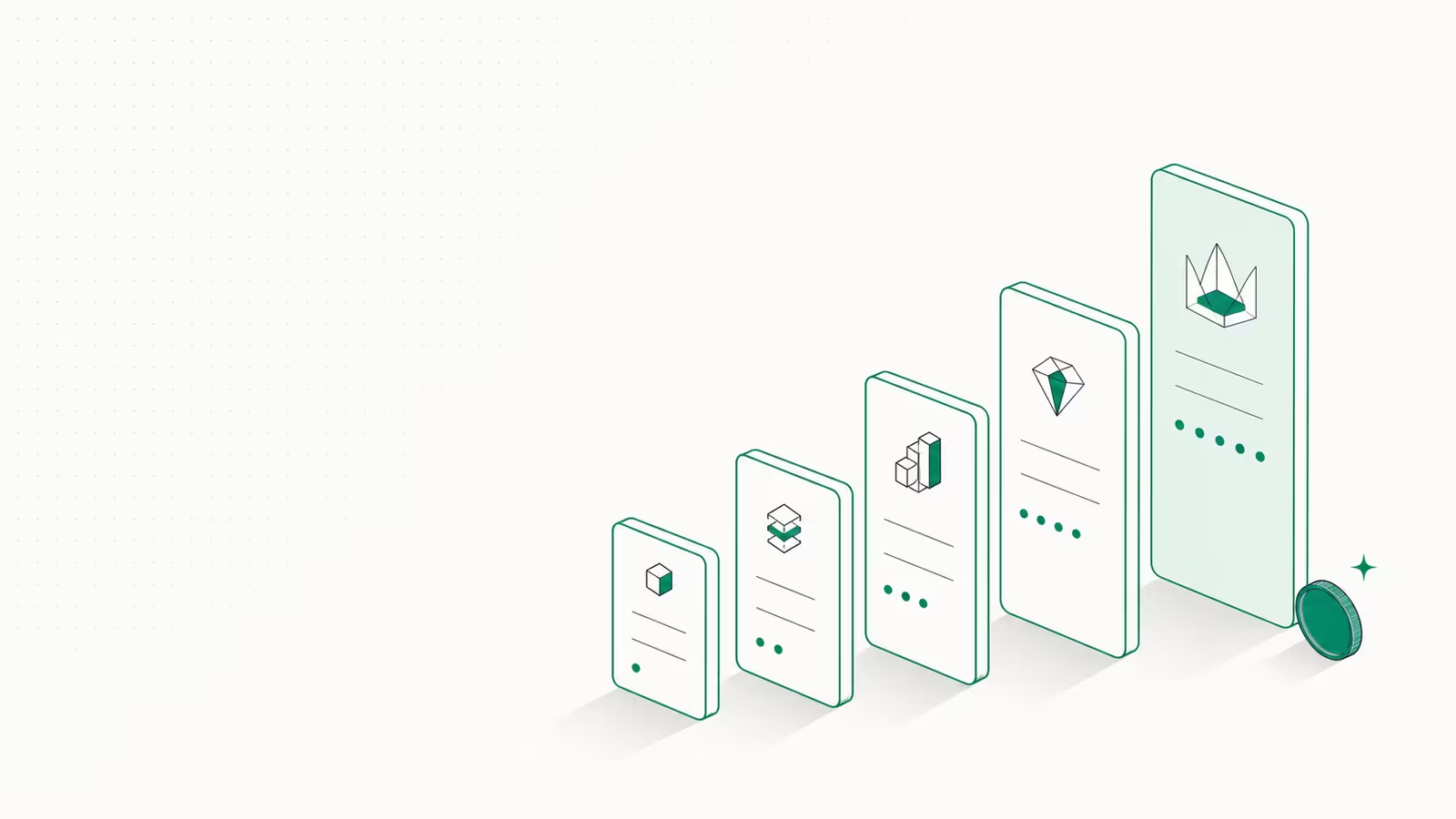
OpenArt is a credit-based AI image and video studio, and every paid plan is really just a monthly credit allowance. Roughly one credit produces one standard image, so a plan's credit count is close to its monthly image ceiling. Here are the current tiers straight from OpenArt's pricing page (July 2026), with the annual-billing price in parentheses:
| Plan | Monthly (annual) | Credits/mo | ~Images | ~Videos | Commercial use |
|---|---|---|---|---|---|
| Free | $0 | 40 one-time + daily basics | ~10–20 | — | No |
| Essential | $14 ($12.60) | 4,000 | ~4,000 | ~50 | No |
| Advanced | $29 ($23.20) | 12,000 | ~12,000 | ~150 | Yes |
| Infinite | $56 ($43.70) | 24,000 | ~24,000 | ~300 | Yes |
| Wonder | $240 ($175.20) | 106,000 | ~106,000 | ~1,300 | Yes |
Annual billing knocks 10–27% off depending on tier. All prices are charged in USD only, with no country-specific pricing. The two plans that matter for most people are Essential and Advanced; Infinite and Wonder target studios and agencies generating tens of thousands of assets a month.
How OpenArt credits actually work
Credits are the whole billing model, so the trap is misjudging how fast they burn. A standard image costs about one credit, but video is far heavier — the Essential plan's 4,000 credits map to roughly 4,000 images or about 50 videos, which works out to around 80 credits per short clip. Higher-quality models and larger resolutions cost more per generation, so real-world output lands below the headline number if you lean on premium models. Two rules catch people out. First, monthly plan credits reset each month and do not roll over, so unused credits vanish. Second, add-on credit packs you buy on top of a plan do carry forward if unused. So the honest way to size a plan is to estimate your monthly generations, then pick the tier just above that, rather than banking on saving up an allowance you'll lose anyway.
The commercial-rights catch most guides miss
This is the single most important line in OpenArt's pricing, and most listicles gloss over it: commercial usage rights are not included on the Free or $14 Essential plans. They begin at the $29 Advanced tier. OpenArt's own help center says you own the images you generate and may use, modify, and distribute them "commercially or non-commercially, with proper attribution to OpenArt" — but that grant is gated to paid commercial tiers. In practice, if you're a freelancer, an Etsy seller, a marketer, or anyone putting AI art on something you charge money for, Essential is the wrong plan no matter how cheap it looks. Budget for Advanced at $29/month. Hobbyists making wallpapers, D&D portraits, or personal experiments are fine on Essential or the free tier. Read the terms before you build a business on a $14 subscription that doesn't license the output.
OpenArt vs Midjourney vs Leonardo: value per dollar
OpenArt's pitch is breadth: 100-plus models, image and video, characters, and a story mode, all under one credit balance. But is it cheap? On a pure cost-per-1,000-images basis, OpenArt is competitive but not the outright winner, and the three tools don't bill the same way, which makes raw price tags misleading.
| Tool | Entry paid plan | What you get | Normalized cost |
|---|---|---|---|
| OpenArt Advanced | $29/mo | 12,000 credits (~12,000 images) | ~$2.42 per 1,000 images |
| OpenArt Essential | $14/mo | 4,000 credits (~4,000 images), no commercial | ~$3.50 per 1,000 images |
| Midjourney Standard | $30/mo | ~15 fast GPU hrs + unlimited "relax" generations | Effectively unlimited (slow queue) |
| Leonardo AI Apprentice | $12/mo | 8,500 tokens/mo | Token cost varies by model |
The takeaway: Midjourney Standard at $30 gives unlimited images in relax mode, so heavy generators who don't mind a slower queue get the best raw volume there — but there's no free tier and it's image/video only, with a strong-but-narrow house style. Leonardo uses a token system (150 free tokens/day, then $12/$30/$60 tiers) where a single high-res generation can eat several tokens, so its "cheap" entry plan runs out faster than it looks. OpenArt sits in the middle: predictable per-image pricing, the widest model catalog, and video included — at the cost of commercial rights being paywalled to $29. If you want to avoid subscriptions entirely, you can run open image models yourself; see our guide to open-weight AI models you host yourself and the cheapest cloud GPUs to run them on.
Is OpenArt AI free to use?
Yes, partly. New accounts get 40 trial credits and a 7-day trial of premium features and advanced models, plus free generations on basic models with no credit card required. The 40 credits are enough for roughly 10–20 premium images to test the interface, and the basic-model tier is genuinely useful for trying the product or for occasional low-stakes images. The catch is that the free tier carries no commercial usage rights, restricts you to basic models, and doesn't include the premium engines, video, characters, or the story tools that are OpenArt's real draw. Treat the free plan as an extended demo rather than a permanent solution. If you only need a handful of images a month for personal use, it can work indefinitely on the daily basic-model allowance; if you need quality, volume, or the right to sell, you'll hit the paywall quickly.
Which OpenArt plan should you pick?
For most individual creators, Advanced at $29/month is the plan to buy — it's the cheapest tier that includes commercial usage rights, and its 12,000 credits cover heavy personal and freelance workloads. Choose based on what you're doing:
- Just testing or personal-only images: Start on the free tier, then move to Essential ($14) if you generate regularly but never sell the output.
- Freelancers, marketers, small businesses: Go straight to Advanced ($29), because you need the commercial license, and 12,000 credits is plenty for client work.
- Content studios, agencies, high-volume video: Infinite ($56) for 24,000 credits and unlimited access to top models, stepping up to Wonder ($240) only if you're generating six figures of assets monthly.
- Cost-obsessed high-volume image makers: Compare against Midjourney Standard ($30) for unlimited relax-mode generation, if its house style and lack of a free tier suit you.
Pay annually if you're committing — the 20%-plus discount on Advanced and above pays for itself within two months.
Frequently asked questions
Is OpenArt worth the money? For creators who want one tool spanning many image models plus video, characters, and story mode, OpenArt is reasonable value: the $29 Advanced plan lands around $2.42 per 1,000 images with commercial rights. It's less compelling if you only need one style or the highest raw volume, where Midjourney's unlimited relax mode or self-hosting open models can be cheaper.
Can I sell art made with OpenArt AI? Yes, but only on a plan that includes commercial usage rights — that means Advanced ($29/month) or higher. The Free and Essential ($14) tiers do not grant commercial rights, so selling output made on them isn't licensed. OpenArt states you own your generated images with attribution once you're on a commercial tier.
Is OpenArt AI free to use? There's a free tier: 40 one-time trial credits valid for seven days, plus daily free generations on basic models. It's fine for testing or occasional personal images but excludes premium models, video, and commercial rights.
What is the best AI art generator? There's no single winner. OpenArt is best for model variety and image-plus-video under one subscription; Midjourney leads on out-of-the-box aesthetic quality and unlimited volume; Leonardo suits game and design assets with its token model. Match the tool to your style, volume, and whether you need commercial rights.
Sources
- OpenArt — Pricing: official current plans, prices, credits, and annual-billing discounts (July 2026).
- OpenArt — Help Center: credit reset/no-rollover, USD-only billing, image ownership, and commercial-use terms.
- OpenArt — About / FAQ: free-tier terms — 40 trial credits, 7-day premium trial, free basic-model generations, no card required.
- Midjourney — Comparing Plans: Basic/Standard/Pro/Mega tiers, GPU hours, and relax-mode limits.
- Leonardo AI pricing (eesel analysis): token model, free 150 tokens/day, and paid tier costs.
Some links may earn us a commission at no extra cost to you.

Waqas Ahmed Waseer
Waqas Ahmed Waseer is a developer and automation builder with 8+ years shipping production systems used by 100k+ people. He builds custom multi-tenant SaaS, AI automation (n8n, LLM workflows, WhatsApp bots) and hosting infrastructure (WHM/cPanel, CloudLinux) — and is the maker of WaSphere, FlowMaticX, and the WaseerHost hosting brand. 100+ projects delivered for SMBs, agencies and funded startups.