Fal, the San Francisco startup that runs image, video and audio models for other companies, has raised a $1.3 billion Series F that values it at $16 billion — roughly double its valuation six months earlier. The round, reported by Bloomberg on November 3, was led by Bessemer Venture Partners with Nvidia joining as a strategic investor alongside Sound Ventures, HOF Capital and T. Rowe Price. For a company most consumers have never heard of, the fal valuation is one of the clearest signals yet that in 2026 the money in AI is moving from models to the plumbing that runs them.
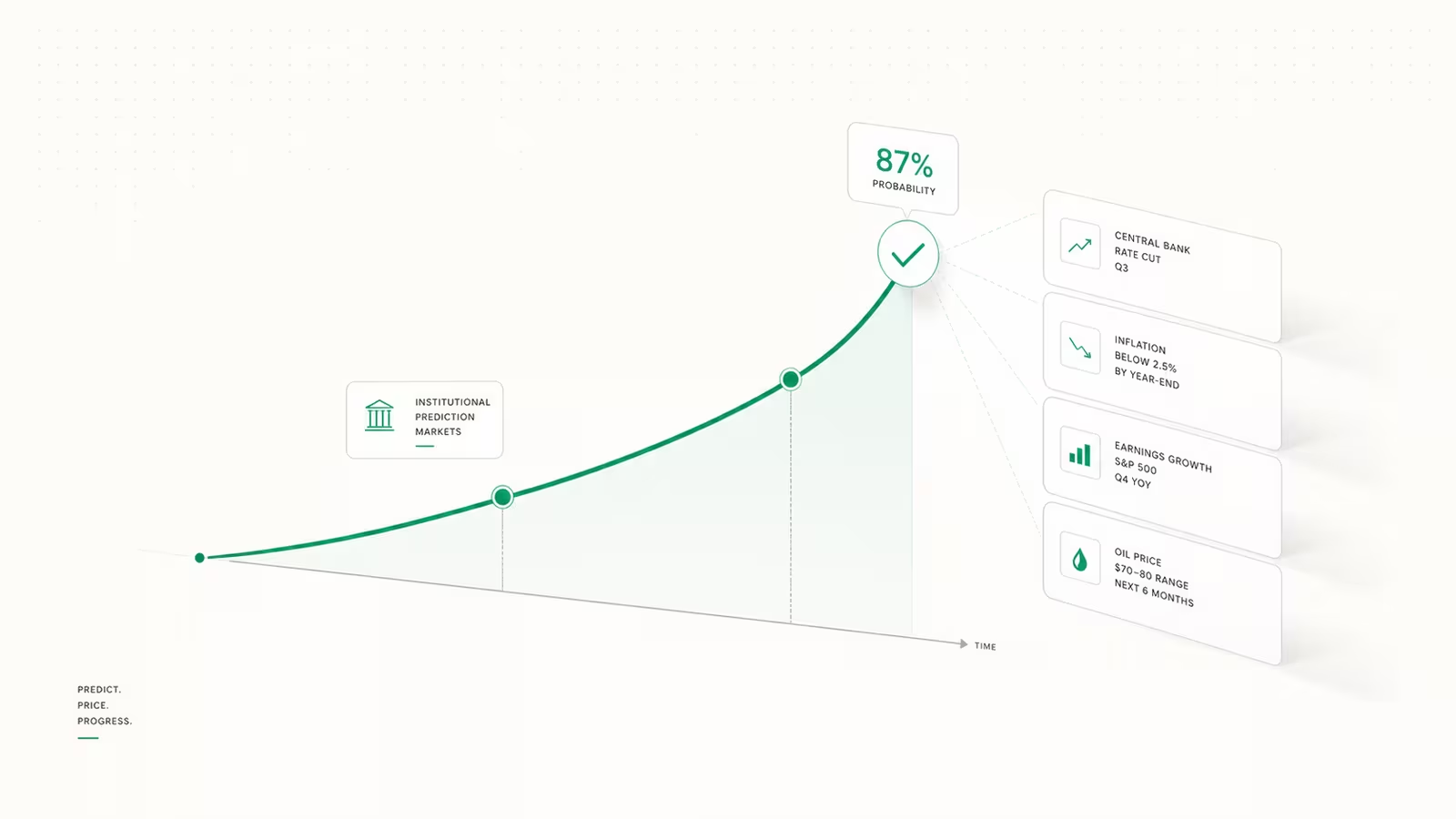
The headline number is dramatic, but the trajectory behind it is the real story: fal was valued at around $1.5 billion in mid-2025 and about $8 billion as recently as April 2026. Demand for "inference" — the act of running an already-trained model to generate an output — has grown faster than the company could add compute. CEO Burkay Gur told reporters fal had to limit customer usage over the summer because it could not meet demand. That is an unusual problem, and it is exactly the kind investors are now paying up for.
What does fal actually do?
Fal is infrastructure, not a consumer app. It gives developers a single API to run generative-media models — images, video, audio and 3D — without buying GPUs, managing clusters or hand-optimizing each model. A developer calls fal the way they would call any cloud service, and fal handles the hard part: running the model fast and cheaply at scale. The platform hosts more than 600 models, including Black Forest Labs' FLUX image models, and its customers reportedly include Adobe, Canva and Shopify.
That focus matters. Most of the attention in AI goes to the labs that train frontier models, but every image a design tool generates and every clip a video app renders is an inference call that has to run somewhere. Fal bet early that "generative media" — not text — would be the workload that strained capacity first, and built a system tuned for it. The payoff shows in the numbers: Bloomberg reported fal's annualized revenue had passed $800 million earlier in 2026, extraordinary for a company this young.
Why is AI inference suddenly the hottest bet?
For three years the prestige in AI sat with training. In 2026 the economics flipped. Training a model is a one-time capital cost; inference is a recurring one that scales with every user and every request. As generative features ship inside mainstream products, inference becomes the line item that never stops growing — and the layer that can actually be sold as a high-margin service.
The market math explains the enthusiasm. Analysts at MarketsandMarkets project the AI inference market will grow from roughly $106 billion in 2025 to about $255 billion by 2030. Nvidia's decision to invest directly is telling: the chipmaker benefits whenever a company like fal buys more GPUs and keeps them busy, so a strategic stake aligns the hardware vendor with the software layer selling access to it. The same logic is pulling capital toward every rung of the inference ladder, a shift we traced in our look at why AI startups captured the lion's share of 2026 funding.
How fal's valuation climbed so fast
Fal's rise is steep even by 2026 standards. The company was founded in 2021 by Burkay Gur, a former machine-learning manager at Coinbase, and Gorkem Yurtseven, an ex-Amazon engineer. It started in data infrastructure and pivoted after Stable Diffusion's launch, hosting an optimized version of the model; inference revenue reportedly hit $1 million far faster than the founders expected, and the company followed the demand.
Fal disclosed the Series F alongside a previously completed $350 million Series E led by Sequoia, putting $1.65 billion of fresh capital on the balance sheet across the two rounds. Bessemer has backed the company through most of its life, a continuity that is rare in a market where mega-rounds often rotate lead investors.
| Milestone | Date | Valuation | Notable detail |
|---|---|---|---|
| Early growth | Mid-2025 | ~$1.5B | Inference demand accelerating |
| Series D/E ramp | Late 2025–April 2026 | ~$8B | Sequoia leads growth rounds |
| Series E | 2026 (disclosed Nov) | — | $350M, Sequoia-led |
| Series F | Nov 2026 | $16B | $1.3B, Bessemer-led; Nvidia strategic |
Who is fal competing with?
Fal is not alone in selling inference. Together AI has built a comparable business around open-source models and raised at an $8.3 billion valuation — we covered that in our breakdown of Together AI's $800M Series C. Replicate popularized the model-as-an-API pattern, and specialized chip companies such as Groq compete on raw speed. Fal's edge is narrower and deeper: it is optimized specifically for generative media, where latency and cost per image or per second of video decide whether a product is viable.
The risk is the same one facing every inference provider. Margins depend on access to GPUs, and the cost of that compute is set largely by Nvidia. A provider that cannot secure chips cheaply, or that gets squeezed when hyperscalers bundle inference into their own clouds, can see its economics erode quickly. Fal's Nvidia investment helps on the supply side, but it does not remove the structural dependence.
What the fal round signals for startups
For founders watching the funding market, the fal deal reinforces a pattern visible all year: capital is concentrating in a small number of companies that sit underneath the AI boom rather than on top of it. Picks-and-shovels businesses — compute, inference, data, evaluation — are commanding valuations that would have seemed absurd for infrastructure a few years ago, even as early-stage rounds elsewhere get harder, a divergence we examined in 2026's record megadeals and tougher seed market.
The caution for everyone else is that a $16 billion valuation is a bet on demand continuing to outrun supply. If compute gets cheaper and more abundant, the scarcity that lets fal charge a premium softens. For now, a company that had to turn customers away is being rewarded for it — and that tells you most of what you need to know about where AI value is pooling in late 2026.
FAQ
What is fal's valuation in 2026? Fal is valued at $16 billion following a $1.3 billion Series F announced in early November 2026. That is roughly double its valuation of about $8 billion six months earlier, and around ten times its mid-2025 valuation of approximately $1.5 billion.
Who led fal's Series F? Bessemer Venture Partners led the $1.3 billion round. Nvidia joined as a strategic investor, alongside Sound Ventures, HOF Capital and T. Rowe Price. Fal also disclosed a previously completed $350 million Series E led by Sequoia, bringing the combined total to $1.65 billion.
What does fal do? Fal runs generative-media AI models — images, video, audio and 3D — for other companies through a single API, so developers do not have to buy GPUs or manage their own inference infrastructure. It hosts more than 600 models and reportedly serves customers including Adobe, Canva and Shopify.
Why is AI inference such a big deal in 2026? Inference is the recurring cost of running AI models in production, and it scales with every user request. As generative features ship inside mainstream apps, inference spending grows continuously — MarketsandMarkets projects the market will reach roughly $255 billion by 2030 — which is why investors are pouring money into the companies that provide it.
Sources
- Bloomberg — AI Inference Startup Fal Raises Capital at $16 Billion Valuation: round size, $16B valuation, lead and strategic investors, revenue figure.
- Tech Funding News — Fal raises $1.3B Series F at $16B: founder background, pivot story, valuation trajectory, inference market forecast, CEO capacity quote.
- Tech Startups — Startup Funding News, November 4, 2026: investor list, Series E disclosure, customer and model-count details.
- Tech.eu — Fal doubles valuation to $16B: confirmation of valuation doubling and round context.
- DataForSEO: SERP and keyword data used for TechRiseUps research.
Some links may earn us a commission at no extra cost to you.

Waqas Ahmed Waseer
Waqas Ahmed Waseer is a developer and automation builder with 8+ years shipping production systems used by 100k+ people. He builds custom multi-tenant SaaS, AI automation (n8n, LLM workflows, WhatsApp bots) and hosting infrastructure (WHM/cPanel, CloudLinux) — and is the maker of WaSphere, FlowMaticX, and the WaseerHost hosting brand. 100+ projects delivered for SMBs, agencies and funded startups.