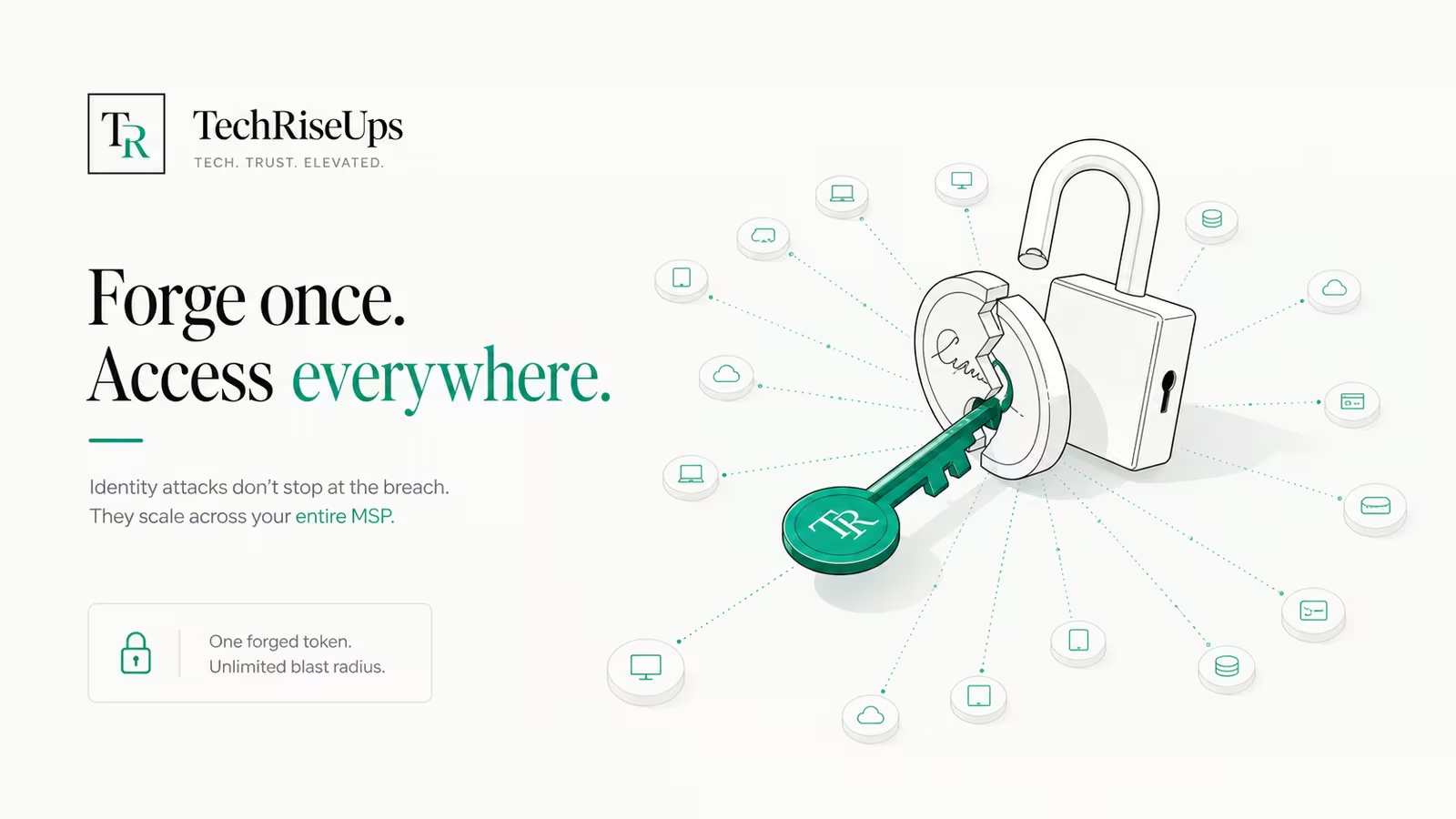
Certighost is a critical Active Directory Certificate Services (AD CS) vulnerability, tracked as CVE-2026-54121, that lets an ordinary low-privileged domain user impersonate a Domain Controller and take over an entire Windows domain. Microsoft patched it in the July 14, 2026 security update and rated it improper authorization at CVSS 8.8. On July 24 the researchers who found it published a working proof-of-concept, so the window between "theoretical" and "weaponized" has already closed. If you run an Enterprise Certification Authority, this is a patch-now item.
The reason it matters is the gap between how little the attacker needs and how much they get. No admin rights. No phishing. No user interaction. A single normal domain account is enough to walk out with the keys to the directory.
What is Certighost (CVE-2026-54121)?
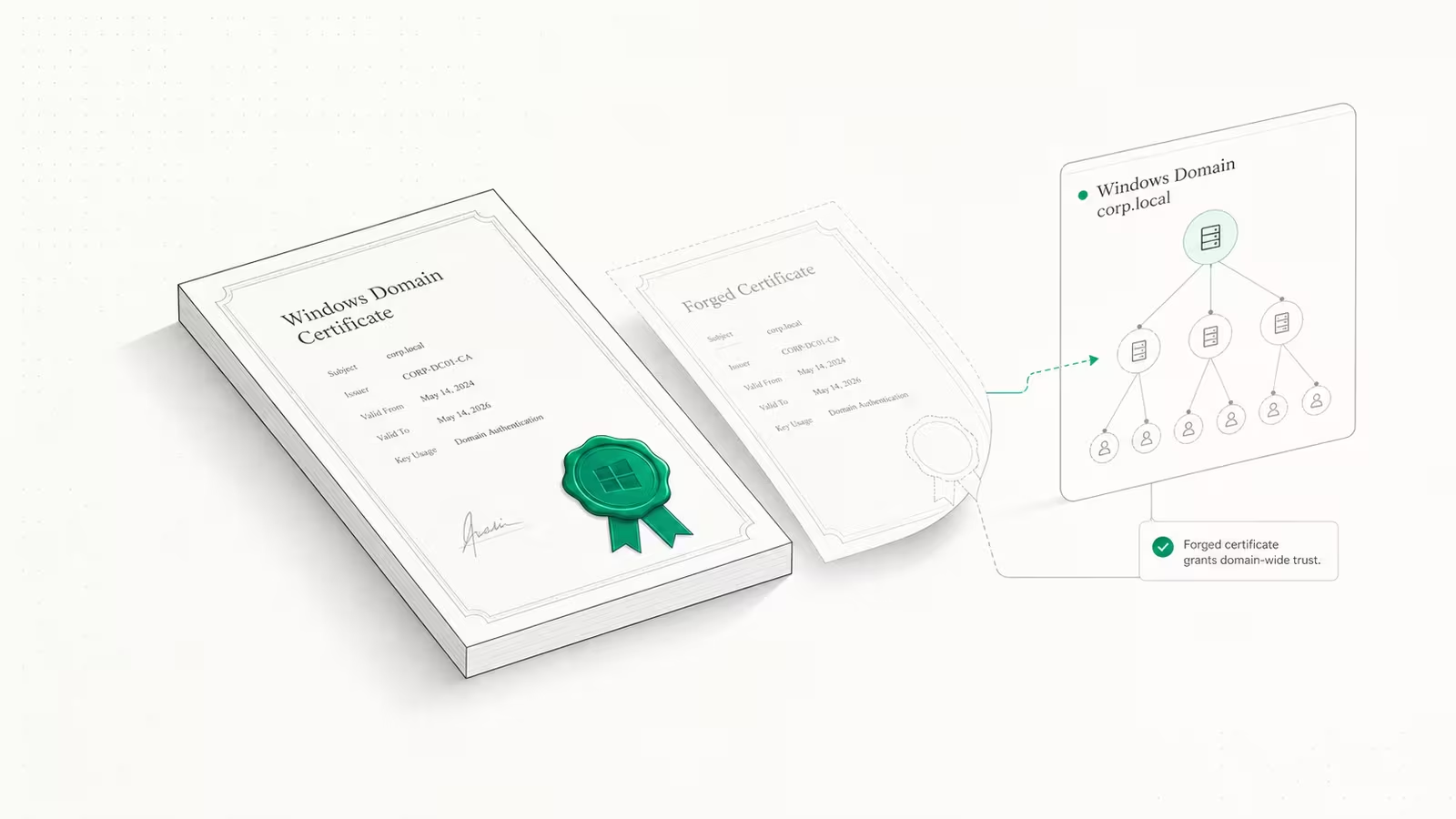
Certighost is an improper-authorization bug in the AD CS enrollment path, disclosed on July 24, 2026 by researchers H0j3n and Aniq Fakhrul. When a Certification Authority (CA) cannot resolve the identity of the machine it is issuing a certificate for, the Windows enrollment protocol lets the request supply fallback attributes, including cdc (which domain-controller host to consult) and rmd (which object to look up). The vulnerable CA followed that cdc pointer to an attacker-controlled host without checking that it was a real Domain Controller. That fallback lookup is called a "chase." By pointing the chase at their own rogue service, an attacker convinces the CA to mint a certificate carrying a Domain Controller's identity. It affects Enterprise CAs on Windows Server 2012 through 2025 that were unpatched before the July 2026 update. The result is full domain compromise from a standing start.
How the Certighost attack works
The chain strings together three well-known Active Directory weak points and turns them into one clean privilege-escalation path. According to the researchers' write-up and Field Effect's analysis, it runs roughly like this:
| Step | What the attacker does |
|---|---|
| 1 | Creates a computer account using the default ms-DS-MachineAccountQuota of 10 — any domain user can add up to ten |
| 2 | Stands up rogue LSA and LDAP listeners on ports 445 and 389 |
| 3 | Submits a certificate request with a malicious cdc attribute pointing the CA's "chase" at that rogue host |
| 4 | Relays the CA's authentication challenge to a real DC via Netlogon and returns the target DC's objectSid and dNSHostName |
| 5 | Receives a certificate that authenticates as the Domain Controller |
| 6 | Uses the DC's replication rights to run DCSync and pull the krbtgt secret |
Once you hold krbtgt, you can forge Golden Tickets for any account in the domain. That is game over: the certificate authenticates as the DC, and the DC's replication rights let the attacker DCSync the krbtgt hash. The ms-DS-MachineAccountQuota default of 10, which lets any authenticated user create machine accounts, is the quiet enabler here — it is the same default that has fueled AD attacks for years.
Who is affected
You are exposed if you run an Enterprise Certification Authority (the AD CS role) that had not applied the July 14, 2026 updates, the default Machine certificate template is available for enrollment, and the CA can reach an attacker's SMB and LDAP listeners on the internal network. Per SentinelOne's vulnerability entry, affected builds span Windows Server 2016 and later hosting the CA role.
If you do not run AD CS at all, Certighost does not apply to you directly — but this is a good moment to confirm that, because plenty of organizations stood up a CA years ago for Wi-Fi or VPN certificates and forgot it exists. A forgotten Enterprise CA is exactly the kind of Tier 0 asset that turns a minor foothold into a full breach. This is the same identity-plane exposure we cover in zero trust vs VPN: the certificate authority is a trust anchor, and anything that can forge its output owns everything downstream.
What to do now
Patch first. Apply the July 14, 2026 security update to every host running the AD CS role. The fix adds a validation gate (_ValidateChaseTargetIsDC) that rejects IP literals and malformed names and confirms the cdc target resolves to a genuine Domain Controller computer object — with the SERVER_TRUST_ACCOUNT flag and a matching SID — before it follows any chase. It ships on the same monthly Patch Tuesday cadence we broke down for June's record-setting round, so it may already be sitting in your update queue.
If you genuinely cannot patch immediately, the researchers documented a stopgap — clearing the chase flag with certutil -setreg policy\EditFlags -EDITF_ENABLECHASECLIENTDC and restarting CertSvc. Treat it as a lab-tested workaround only: it was validated in a controlled environment, can disrupt legitimate enrollment, and is no substitute for the update.
Beyond this specific CVE, the standard AD CS hardening still pays off: enforce manager approval on sensitive templates, disallow attacker-supplied subjects on client-auth templates, remove the EDITF_ATTRIBUTESUBJECTALTNAME2 flag if it is set, lower ms-DS-MachineAccountQuota to 0 where you can, and treat the CA as a Tier 0 asset restricted to Tier 0 admins. The same "rotate the secret after you patch" discipline that applied to the SharePoint zero-day applies here: if you suspect exploitation, assume krbtgt is compromised and rotate it twice.
Should you be worried?
Yes, if you run AD CS, and the urgency is higher than a normal Patch Tuesday item because the exploit is public. A CVSS 8.8 that needs only a domain account and yields krbtgt is close to worst-case for an internal attacker or anyone who has already phished a single low-value user. The saving grace is scope: this is an internal privilege-escalation bug, not an internet-facing pre-auth RCE, so an attacker needs a foothold first. That does not make it low-risk — most ransomware crews already have that foothold by the time they start hunting for domain dominance.
FAQ
What is Certighost?
Certighost is the public nickname for CVE-2026-54121, an Active Directory Certificate Services flaw that lets a low-privileged domain user impersonate a Domain Controller by abusing the CA's cdc "chase" fallback. Microsoft rated it improper authorization at CVSS 8.8 and patched it on July 14, 2026.
Is CVE-2026-54121 being actively exploited? A working proof-of-concept was published on July 24, 2026, which means reliable exploit code is public. There is no requirement for special skill to run it, so any AD CS environment that is still unpatched should be considered at immediate risk even if targeted attacks have not been widely reported yet.
How do I fix Certighost?
Apply Microsoft's July 14, 2026 security update to every AD CS host. The patch validates that the cdc chase target is a real Domain Controller before the CA follows it. If you cannot patch at once, the EDITF_ENABLECHASECLIENTDC registry workaround is a temporary stopgap, not a permanent fix.
Am I affected if I don't run Active Directory Certificate Services? No. Certighost specifically abuses an Enterprise Certification Authority, so environments without the AD CS role are not exposed to this CVE. The catch is that many organizations run a forgotten CA they set up years ago — confirm you truly have none before ruling it out.
Sources
- Microsoft MSRC — CVE-2026-54121 Security Update Guide — official advisory, CVSS, affected products, patch date
- H0j3n — CVE-2026-54121 technical write-up (GitHub gist) — primary researcher analysis of the chase/cdc mechanism and the fix
- aniqfakhrul — CVE-2026-54121 proof-of-concept (GitHub) — the public PoC released July 24, 2026
- The Hacker News — Certighost Exploit Lets Low-Privileged Users Impersonate a Domain Controller — launch-day reporting, attack chain, DCSync/krbtgt impact
- SentinelOne — CVE-2026-54121 vulnerability database — affected versions and remediation summary
- Field Effect — Public Exploit Enables Domain Controller Impersonation — step-by-step exploitation and mitigation guidance
Some links may earn us a commission at no extra cost to you.

Waqas Ahmed Waseer
Waqas Ahmed Waseer is a developer and automation builder with 8+ years shipping production systems used by 100k+ people. He builds custom multi-tenant SaaS, AI automation (n8n, LLM workflows, WhatsApp bots) and hosting infrastructure (WHM/cPanel, CloudLinux) — and is the maker of WaSphere, FlowMaticX, and the WaseerHost hosting brand. 100+ projects delivered for SMBs, agencies and funded startups.